
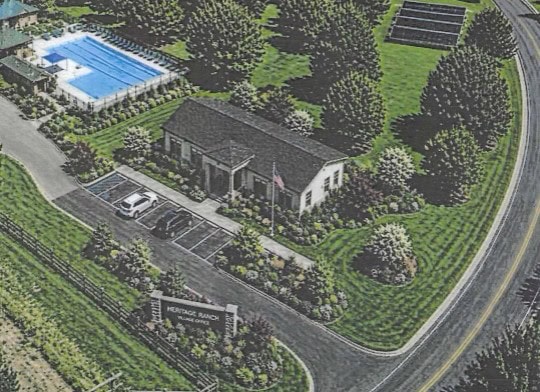
We wanted to provide an update on the project and clarify our current path forward.
The project is still moving forward; however, before asking contractors to invest additional time and effort into updated pricing, design revisions, or project input, we are first confirming the proper entitlement and permitting path with the County.
Because the current REC zoning presents some entitlement questions that need to be clarified in order to obtain the necessary permits, the Board believes it is appropriate for the HROA Office Subcommittee to make the initial pre-application inquiry with the County. The purpose of that inquiry is to clearly define the process, confirm what approvals will be required, and identify any potential issues before we move too far down the road.
This should be viewed as a necessary due-diligence step rather than a change in direction. Our goal is to ensure that the architect, contractors, and Board are all working from the same permitting assumptions before finalizing the project scope.
Assuming the Gabriel Architects proposal is reviewed by the SPC next Monday and approved, the next step would be to engage Gabriel to assist with the pre-application process and help define the most effective path forward for obtaining the necessary permits.
With respect to stick-built versus modular construction, that issue will primarily affect the building permit process and is not the primary concern at this stage. Our broader objective is to determine the best way to achieve zoning consistency within the current REC zoning designation or, alternatively, identify the appropriate entitlement path, whether through the standard Site Plan Review process or a Conditional Use Permit, if required.
Because HROA has the greatest long-term interest in the success of this project, it is important that we carefully consider how both the building and its operations are defined. For example, we need to determine whether the facility is best characterized as an office building, an HROA information center, or another use classification that aligns more appropriately with the REC zoning framework.
We believe this approach will help keep everyone aligned and engaged while demonstrating that we are being deliberate and organized before requesting final pricing, commitments, or additional project work.
We appreciate your continued interest and involvement and will keep you informed as we move through this process.
Sincerely,
Lisa Ptaszenski
HROA Board of Directors